


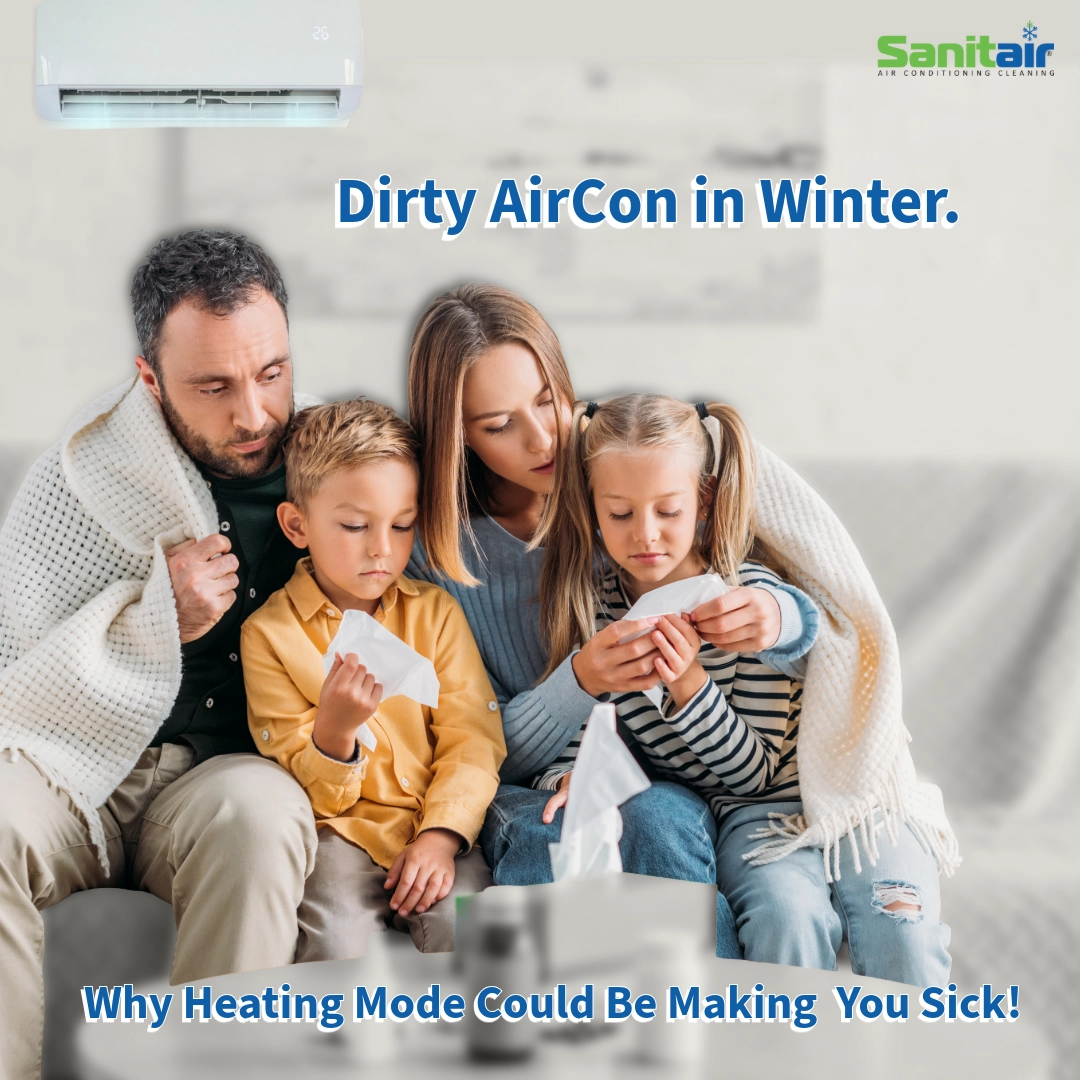
Dirty Aircon in Winter: Why heating mode could be making you sick!
As the cooler months settle in across Australia, many of us switch our reverse-cycle air conditioners from cooling to heating mode. That first burst of warm air feels comforting after a chilly day. But what if that warm air is carrying hidden risks to your health?
Your air conditioner might be harbouring months of built-up contaminants from summer use. When you flip to heating, those contaminants including mould, bacteria and allergens can become more problematic. Understanding how this happens can help you protect your family’s indoor air quality and wellbeing.
How Your Reverse-Cycle Aircon Works in Summer vs Winter
Reverse-cycle air conditioners (also called heat pumps) are clever systems that use refrigerant to transfer heat.
In cooling mode during summer:
- The indoor unit’s evaporator coil gets very cold.
- Warm indoor air passes over these cold coils.
- Moisture in the air condenses on the coils (like dew on a cold drink), cooling and dehumidifying the room.
- This condensate drains away, but not always perfectly.
This process creates a dark, moist environment inside the indoor unit, perfect conditions for problems to develop over a long Australian summer.
In heating mode during winter, a reversing valve changes the refrigerant flow:
- The indoor coil (previously the evaporator) now acts as the condenser.
- It becomes hot and releases warmth into your home.
- The outdoor unit absorbs heat from the outside air.
The key issue? All the dirt, dust and biological matter that accumulated on the coils during summer doesn’t disappear. When you heat those coils, you’re essentially “cooking” the contaminants and blowing them into your living spaces.
What Builds Up in Your Aircon Over Summer?
Australian summers are hot and often humid, especially in northern states like Queensland and the Northern Territory. Air passing through your indoor unit carries:
- Dust and dirt from everyday life.
- Human skin flakes and hair.
- Pet dander from dogs, cats or birds.
- Cooking fats and oils
- Pollen and outdoor pollutants.
Pests also find their way in. In Australia, geckos, cockroaches, rats and mice are common intruders. Their droppings, skin sheds and remains add organic matter to the coils.
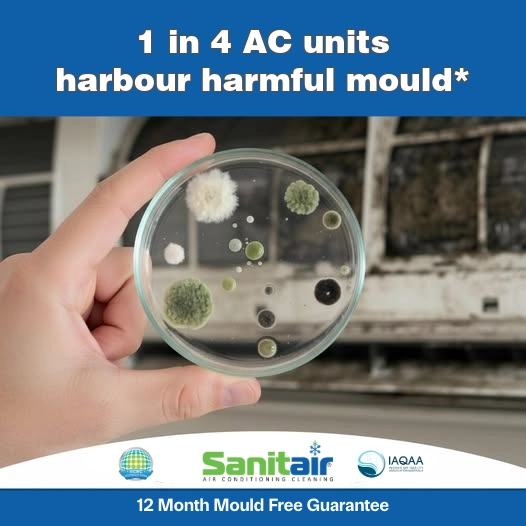
These materials don’t just sit there — they become food for microorganisms. The moist, dark coils provide an ideal breeding ground for mould (such as Cladosporium or Penicillium), bacteria and biofilms (slimy layers of microbes).
Over months of cooling use, contamination builds up deep in the fins of the evaporator coil, drain pan and blower fan areas that are hard to reach with basic cleaning.
Why Heating Mode Increases the Risk
When you switch to heating:
- The coils heat up significantly.
- This warmth can “activate” dormant mould spores and bacteria.
- Heated air circulates faster and drier, potentially aerosolising particles that were stuck in moist conditions.
- Biofilms and pathogens get disturbed and blown directly into bedrooms, living rooms and kitchens.
Heating a contaminated system is like turning on a fan over a petri dish. What was a slow-growing issue in summer becomes a more direct exposure risk in winter, when families spend more time indoors with windows closed.
Health Effects: From Mild Allergies to Serious Concerns
Exposure to these contaminants can cause or worsen a range of symptoms, often dismissed as “winter colds” or seasonal issues:
- Respiratory problems — coughing, wheezing, shortness of breath and aggravated asthma.
- Allergic reactions — sneezing, itchy eyes, runny nose, skin rashes.
- “Sick building” symptoms — headaches, fatigue, sinus issues.
- More serious risks — In vulnerable people (children, elderly, immunocompromised), mould and bacteria can lead to hypersensitivity pneumonitis (“air conditioner lung”), fungal infections, or bacterial illnesses.
Studies and real-world cases show that airborne fungal spores from air conditioners can increase significantly when the system runs, especially if contaminated. Pet dander, cockroach allergens and rodent droppings add to the mix, triggering stronger immune responses.
Many Australians notice musty smells when first turning on the heat — a clear warning sign of mould and bacteria.
Who Is Most at Risk?
- Families with young children or elderly members.
- People with asthma, allergies or respiratory conditions.
- Households with pets.
- Homes in humid or pest-prone areas
- Anyone spending extended time indoors during winter.
Signs Your Aircon Needs Attention Before Winter
- Musty or unpleasant odours when the unit starts.
- Visible dust or black spots around vents or the indoor unit.
- Reduced airflow or weaker heating/cooling.
- Increased allergy or cold-like symptoms when the system runs.
- Higher than usual energy bills (dirty coils make the system work harder).
Prevention and Professional Solutions
Regular cleaning is the best defence. Simple steps include:
- Changing or cleaning filters monthly during use.
- Wiping accessible parts.
- Running the fan-only mode occasionally to dry coils.
But for thorough protection, professional deep cleaning is essential. A qualified Sanitair HVAC Hygienist will clean the evaporator coils, drain systems, fans and other components, applying sanitising treatments and antimicrobials that help inhibit regrowth.
A professional service before winter can remove accumulated contaminants, improve efficiency, reduce energy costs and give you peace of mind.
Don’t Let Dirty Aircon Spoil Your Winter
Your air conditioner should make your home more comfortable — not a source of hidden health risks. By understanding how summer build up affects winter heating, you can take action now.
Don’t wait for symptoms to appear. Book a professional aircon clean before the cold really sets in. Your lungs (and your family’s) will thank you.
Ready to breathe easier this winter? Contact your trusted local Sanitair HVAC Hygienist on 1800 130 168 for a comprehensive deep clean and sanitisation. A small investment in maintenance can make a big difference to your indoor air quality and health.
Sanitair™ - It’s Like A Flu Shot for you Air Conditioner