


The Fogger Floggers Myth – Why the New Australian Mould Standard Discourages Fogging
If you’ve noticed a musty smell when you turn on your air conditioner, black spots on the vents or reduced airflow, you’re likely dealing with mould in your air con system. In Australia’s humid climate, mould growth inside split systems, ducted units and HVAC coils is extremely common — and it can spread spores throughout your home or office every time the system runs.
Australia’s new national standard for professional mould remediation — AS-IICRC S520:2025 provides clear guidance on how to handle mould safely and effectively. One of its strongest messages is that fogging (misting, dry fogging or vapour-phase treatments) should not be used as a primary or standalone method for mould removal.
Here’s why the standard takes this firm stance — and why it matters for your air conditioner.
1. Source Removal Is Essential — Especially in Air Con Systems
The S520 standard emphasises that the most effective mould remediation involves physically removing the contamination. In an air conditioning unit, this means thoroughly cleaning the evaporator coils, blower wheels, drain pans and internal surfaces where mould thrives in the moist, dark environment.
Fogging simply sprays a fine chemical mist into the system or room in an attempt to “kill” the mould. It does not remove the mould colonies, dead spores, fragments or the sticky microbial residues that can still trigger allergies, asthma or respiratory issues when blown into living spaces.
Dead mould in your air con is still a health risk. The standard makes it clear: relying on killing mould instead of proper physical removal is generally not adequate.
2. Health and Safety Concerns for Indoor Air
When you fog an air conditioning system, any chemical residues or disturbed spores can be circulated directly into the air you breathe. Without proper containment, negative pressure and HEPA filtration, fogging can actually worsen cross-contamination.
The new standard prioritises engineering controls and physical cleaning methods (such as specialised coil cleaning, HEPA vacuuming and safe sanitising) to protect occupants and restore genuinely clean indoor air.
3. Avoid the False Sense of Security
Many air con cleaning services promote fogging as a quick, no-fuss solution. While it might seem convenient, it often masks the problem rather than solving it. You may notice the musty smell temporarily disappear, only for mould to return weeks or months later — along with higher energy bills from a dirty, inefficient system.
What Proper Air Con Mould Removal Looks Like Under the Standard
The S520 approach for HVAC systems involves:
Identifying and correcting the moisture source (e.g., blocked drains).
Physically removing visible and hidden mould through specialist cleaning techniques.
Thorough sanitising using appropriate, safe products.
Verification that the system is clean and functioning properly.
How Sanitair Can Assist with Professional Air Con Mould Removal
For over 20 years, Sanitair has been Australia’s leading specialist in air conditioning cleaning and HVAC hygiene. Since 2005, their trained technicians have helped thousands of homeowners and businesses safely remove mould from split systems, ducted air conditioners and commercial HVAC units — without relying on fogging shortcuts.
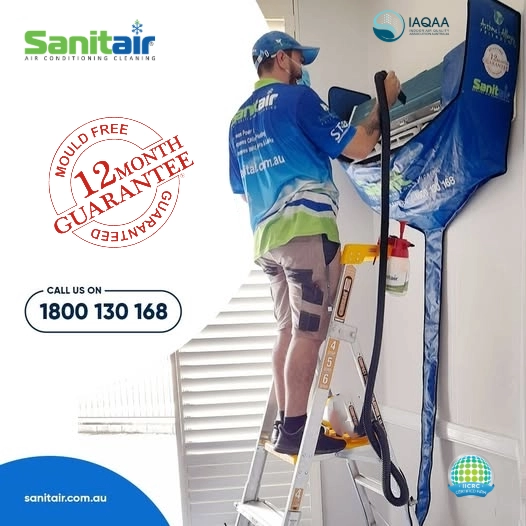
Sanitair’s Premium Clean and Sanitise service focuses on thorough physical cleaning of coils, fans and drain pans using specialised equipment and non-toxic, asthma & allergy-friendly products. This approach aligns closely with the principles of AS-IICRC S520:2025 by prioritising real source removal and proper hygiene practices. Every premium service comes with a 12-month mould-free guarantee on treated indoor evaporator coils, giving you confidence that the job has been done right.
Whether you have a musty split system at home or need to maintain air quality across an office building, Sanitair’s nationwide team delivers consistent, professional results that support healthier indoor air.
The Bottom Line for Your Air Conditioner
Fogging might sound like an easy fix for air con mould, but the new Australian standard discourages it as a primary method because it simply doesn’t deliver lasting, reliable results. True mould remediation in air conditioning systems requires proper physical cleaning, moisture control and verification — not just a chemical mist.
If your air con smells musty or isn’t performing as it should, don’t settle for a quick fog. Choose a professional service that follows best-practice principles for thorough, effective mould removal.
Need expert air con mould removal?
Contact Sanitair on 1800 130 168 or visit www.sanitair.com.au to book your professional clean. Breathe easier with cleaner, healthier air from your air conditioner — backed by over 20 years of specialist experience and a 12-month mould-free guarantee.
The introduction of AS-IICRC S520:2025 is a positive step for Australian homes and workplaces. By moving away from fogging “quick fixes” and towards proper professional air con cleaning, we can all enjoy better indoor air quality and fewer recurring mould problems.
Standards Australia. (2025). AS-IICRC S520:2025 Standard for Professional Mould Remediation (ANSI/IICRC S520:2024 (ED. 4.0) MOD). Available at: https://store.standards.org.au/product/as-iicrc-s520-2025
IICRC. ANSI/IICRC S520 Standard for Professional Mold Remediation. https://iicrc.org/s520/
ANSI Blog. (2024). ANSI/IICRC S520-2024: Professional Mold Remediation. https://blog.ansi.org/ansi/ansi-iicrc-s520-2024-professional-mold-remediation/
C&DR Magazine. (2025). The ANSI/IICRC S520-2024: A Critical Guide for Professional Mold Remediation. https://www.candrmagazine.com/the-ansi-iicrc-s520-2024-a-critical-guide-for-professional-mold-remediation/
Sanitair Australia. Official website. https://www.sanitair.com.au/
FarSight Environmental. (2025). Fogging: Why It Doesn't Work for Mold Remediation. https://www.usefarsight.com/mold-monthly/mold-fogging-why-it-doesnt-work-for-mold-remediation